Buy xshare.eu ?
We are moving the project
xshare.eu .
Are you interested in purchasing the domain
xshare.eu ?
domain@kv-gmbh.de · 0541-91531010
Buy xshare.eu ?
Do brains arise in consciousness or does consciousness arise in brains?
The relationship between brains and consciousness is complex and not fully understood. Some theories suggest that consciousness arises from the complex interactions of the brain's neural networks and processes. On the other hand, some argue that consciousness is a fundamental aspect of the universe that the brain taps into. Ultimately, the exact relationship between brains and consciousness is still a topic of debate among scientists and philosophers. **
Do ticks have brains?
Yes, ticks do have brains, although they are quite simple. Their brains consist of a collection of nerve cells that allow them to process sensory information and control their basic behaviors, such as finding a host to feed on. While their brains are not as complex as those of mammals, ticks are still able to carry out their essential functions through their nervous system and brain. **


Similar search terms for Brains
Top-Angebote
Products related to Brains:
-
DK Children Wonderfully Wired Brains: An Introduction to the World of Neurodiversity by Louise GoodingAn informative and inclusive children's guide to neurodiversity for those not in the know and to inspire children who are neurodivergent. Our brains are unique in the way they function, work, and think. Neurodiversity is still a relatively 'new' concept that can be tricky to understand, but this book is here to help! This inspirational book written by neurodiverse author Louise Gooding challenges misconceptions and shows how neurodivergent brains work a little differently. It is common for neurodiverse people and those with neurological differences to feel as though they don't fit in, but their extraordinary differences should be embraced. Wonderfully Wired Brains teaches children aged 7-9 all about the awesome abilities that neurodiverse individuals have, introduces them to advocates who are challenging neurodiversity stereotypes, and most importantly gives them a safe space to feel accepted. This informative and educational book for children features:- Accurate, understandable explanations of diagnoses that impact the brain, including each area of neurodiversity and what it can or does mean for anyone with that particular neurological difference. - A positive, friendly look at neurodiverse brains that debunks myths and stereotypes. - Informative, inclusive text is accompanied by colourful, modern illustrations. The font and colours used have been selected to accommodate a range of neurodiverse readers. Combining neurodiverse experiences with science, history, and brain-bursting facts, Wonderfully Wired Brains has something for everyone!Whether your child is neurodiverse or not, this book will inspire inquisitive young readers and show them that no two brains function in the same way and that everyone's differences should be celebrated. There really is no other book like it.6,99 £*Shipping: 2,99 £Secure redirect to the provider
-
Wonderfully Wired Brains: An Introduction to the World of Neurodiversity by Louise Gooding and Ruth BurrowsWonderfully Wired Brains is an informative and inclusive children's guide to neurodiversity. Written by neurodiverse author Louise Gooding, this book teaches children aged 7-9 about the awesome abilities that neurodiverse individuals have, introduces them to advocates who are challenging neurodiversity stereotypes, and gives them a safe space to feel accepted. The book challenges misconceptions and shows how neurodivergent brains work a little differently, highlighting the unique ways in which our brains function, work, and think. This educational book features positive, friendly illustrations and accurate, understandable explanations of neurodiversity, making it a valuable resource for children and parents alike.8,99 £*Shipping: 2,99 £Secure redirect to the provider
-
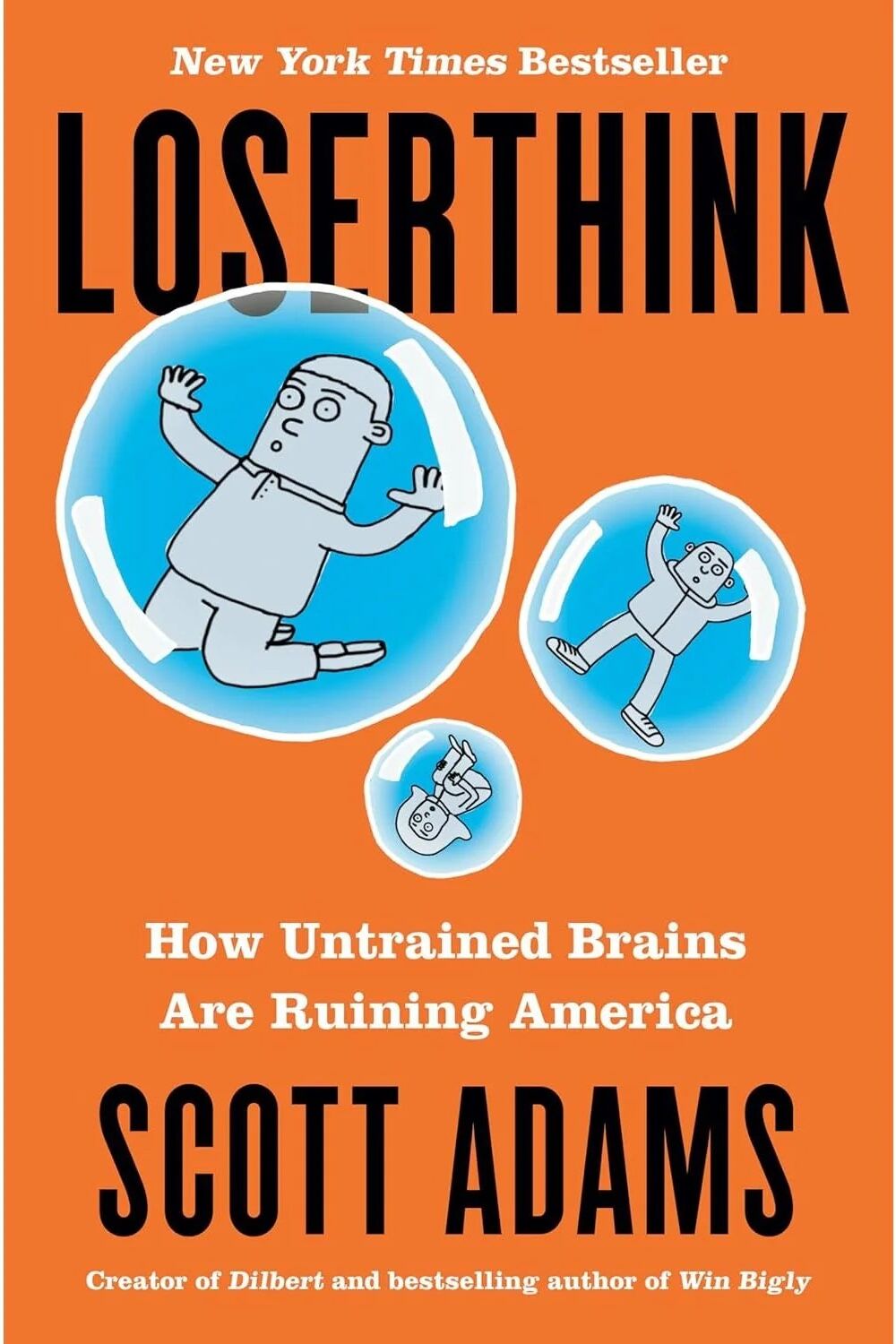
Loserthink by Scott Adams - How Untrained Brains Are Ruining America - Hardback Non Fiction Book - Portfolio 2019Loserthink is a thought-provoking guide by Scott Adams that helps readers escape mental traps and see the world more clearly. Drawing on lessons from various disciplines, Adams exposes everyday reasoning failures that fuel modern arguments and offers practical tools to think more broadly and spot flawed logic. This hardback book explores how even intelligent and educated people can fall into 'loserthink' due to a lack of exposure to best thinking practices. By applying these principles, readers can improve their critical thinking skills and hold their own in debates with confidence.4,99 £*Shipping: 2,99 £Secure redirect to the provider
-
Scribe Publications The Power of Showing Up by Daniel J. Siegel & Tina Payne Bryson - Bestselling Parenting Paperback - How Parental Presence Shapes Kids' BrainsA warm and research-driven guide, 'The Power of Showing Up' by Daniel J. Siegel and Tina Payne Bryson explains what children need most from the adults raising them. Grounded in brain science and attachment theory, the book distills decades of clinical experience into four simple building blocks: safe, seen, soothed, and secure. This clear roadmap helps parents, carers, and teachers build lifelong emotional resilience in the children they love. The authors argue that consistent, attuned presence, not perfection, is the single biggest predictor of a child's long-term happiness and success. This paperback is a valuable resource for anyone looking to understand the importance of parental presence in shaping a child's life and development.7,49 £*Shipping: 2,99 £Secure redirect to the provider



-
Do animals also have brains?
Yes, animals also have brains. The brain is the organ that controls their behavior, movement, and bodily functions. Different animals have different sizes and complexities of brains, depending on their species and evolutionary history. The brain allows animals to process information from their environment, make decisions, and respond to stimuli. **
-
Do leeches have 32 brains?
No, leeches do not have 32 brains. Leeches actually have 32 brains cells, which are spread throughout their bodies. These cells help coordinate their movements and behaviors. Despite having multiple brain cells, leeches do not possess 32 separate brains. **
-
Who eats offal and brains?
Offal and brains are consumed by various cultures around the world. In many countries, offal such as liver, kidneys, and intestines are considered delicacies and are used in traditional dishes. Brains are also consumed in some cultures, often as a source of protein and nutrients. In some places, offal and brains are considered a delicacy and are enjoyed as part of the local cuisine. **
-
Why do brains program themselves?
Brains program themselves through a process called neuroplasticity, which allows them to adapt and reorganize in response to new experiences and learning. This programming is essential for survival and adaptation to changing environments. By constantly updating and rewiring neural connections, brains can optimize their functioning and improve cognitive abilities. Ultimately, self-programming allows brains to learn, grow, and evolve over time. **


Why can most human brains not beat the brains of chimpanzees in memory competitions?
Most human brains cannot beat the brains of chimpanzees in memory competitions because chimpanzees have a larger and more developed hippocampus, which is the part of the brain responsible for memory. Additionally, chimpanzees have been shown to have better short-term memory and spatial memory than humans. This is likely due to the fact that chimpanzees rely more heavily on their memory for survival in the wild, whereas humans have developed other cognitive abilities such as language and problem-solving skills. **
Can brains and eyes be exchanged?
No, brains and eyes cannot be exchanged. The brain is the central organ of the nervous system responsible for processing information and controlling bodily functions, while the eyes are sensory organs that allow us to see. They are not interchangeable as they serve very different functions in the body. Additionally, the brain is a complex organ that cannot simply be transplanted or exchanged like other body parts. **
Top-Angebote
Products related to Brains:
-
Atomic Mass Games Marvel: Crisis Protocol Brains Pack - Hulk Hulkbuster Vision Winter SoldierFour Marvel characters for tabletop miniatures gaming: Hulk, Hulkbuster, Vision, Winter Soldier. Designed for expanding an existing Marvel: Crisis Protocol collection. Miniatures may require assembly.64,99 £*Shipping: 0,00 £Secure redirect to the provider
-
All Categories Goods Outdoor Library Box Wooden Book Exchange Cabinet For Neighborhood Sharing Outdoor Library Box Wooden Book Exchange Cabinet For Neighborhood SharingCreate a welcoming place where stories can be shared, discovered, and loved again. This outdoor library box is a charming wooden cabinet made for neighborhoods, schools, parks, gardens, and front yards. Designed as a book exchange box, it gives...199,97 $*Shipping: 0,00 $Secure redirect to the provider
-
DK Children Wonderfully Wired Brains: An Introduction to the World of Neurodiversity by Louise GoodingAn informative and inclusive children's guide to neurodiversity for those not in the know and to inspire children who are neurodivergent. Our brains are unique in the way they function, work, and think. Neurodiversity is still a relatively 'new' concept that can be tricky to understand, but this book is here to help! This inspirational book written by neurodiverse author Louise Gooding challenges misconceptions and shows how neurodivergent brains work a little differently. It is common for neurodiverse people and those with neurological differences to feel as though they don't fit in, but their extraordinary differences should be embraced. Wonderfully Wired Brains teaches children aged 7-9 all about the awesome abilities that neurodiverse individuals have, introduces them to advocates who are challenging neurodiversity stereotypes, and most importantly gives them a safe space to feel accepted. This informative and educational book for children features:- Accurate, understandable explanations of diagnoses that impact the brain, including each area of neurodiversity and what it can or does mean for anyone with that particular neurological difference. - A positive, friendly look at neurodiverse brains that debunks myths and stereotypes. - Informative, inclusive text is accompanied by colourful, modern illustrations. The font and colours used have been selected to accommodate a range of neurodiverse readers. Combining neurodiverse experiences with science, history, and brain-bursting facts, Wonderfully Wired Brains has something for everyone!Whether your child is neurodiverse or not, this book will inspire inquisitive young readers and show them that no two brains function in the same way and that everyone's differences should be celebrated. There really is no other book like it.6,99 £*Shipping: 2,99 £Secure redirect to the provider
-
Wonderfully Wired Brains: An Introduction to the World of Neurodiversity by Louise Gooding and Ruth BurrowsWonderfully Wired Brains is an informative and inclusive children's guide to neurodiversity. Written by neurodiverse author Louise Gooding, this book teaches children aged 7-9 about the awesome abilities that neurodiverse individuals have, introduces them to advocates who are challenging neurodiversity stereotypes, and gives them a safe space to feel accepted. The book challenges misconceptions and shows how neurodivergent brains work a little differently, highlighting the unique ways in which our brains function, work, and think. This educational book features positive, friendly illustrations and accurate, understandable explanations of neurodiversity, making it a valuable resource for children and parents alike.8,99 £*Shipping: 2,99 £Secure redirect to the provider
-
Do brains arise in consciousness or does consciousness arise in brains?
The relationship between brains and consciousness is complex and not fully understood. Some theories suggest that consciousness arises from the complex interactions of the brain's neural networks and processes. On the other hand, some argue that consciousness is a fundamental aspect of the universe that the brain taps into. Ultimately, the exact relationship between brains and consciousness is still a topic of debate among scientists and philosophers. **
-
Do ticks have brains?
Yes, ticks do have brains, although they are quite simple. Their brains consist of a collection of nerve cells that allow them to process sensory information and control their basic behaviors, such as finding a host to feed on. While their brains are not as complex as those of mammals, ticks are still able to carry out their essential functions through their nervous system and brain. **
-
Do animals also have brains?
Yes, animals also have brains. The brain is the organ that controls their behavior, movement, and bodily functions. Different animals have different sizes and complexities of brains, depending on their species and evolutionary history. The brain allows animals to process information from their environment, make decisions, and respond to stimuli. **
-
Do leeches have 32 brains?
No, leeches do not have 32 brains. Leeches actually have 32 brains cells, which are spread throughout their bodies. These cells help coordinate their movements and behaviors. Despite having multiple brain cells, leeches do not possess 32 separate brains. **
Similar search terms for Brains
-
Loserthink by Scott Adams - How Untrained Brains Are Ruining America - Hardback Non Fiction Book - Portfolio 2019Loserthink is a thought-provoking guide by Scott Adams that helps readers escape mental traps and see the world more clearly. Drawing on lessons from various disciplines, Adams exposes everyday reasoning failures that fuel modern arguments and offers practical tools to think more broadly and spot flawed logic. This hardback book explores how even intelligent and educated people can fall into 'loserthink' due to a lack of exposure to best thinking practices. By applying these principles, readers can improve their critical thinking skills and hold their own in debates with confidence.4,99 £*Shipping: 2,99 £Secure redirect to the provider
-
Scribe Publications The Power of Showing Up by Daniel J. Siegel & Tina Payne Bryson - Bestselling Parenting Paperback - How Parental Presence Shapes Kids' BrainsA warm and research-driven guide, 'The Power of Showing Up' by Daniel J. Siegel and Tina Payne Bryson explains what children need most from the adults raising them. Grounded in brain science and attachment theory, the book distills decades of clinical experience into four simple building blocks: safe, seen, soothed, and secure. This clear roadmap helps parents, carers, and teachers build lifelong emotional resilience in the children they love. The authors argue that consistent, attuned presence, not perfection, is the single biggest predictor of a child's long-term happiness and success. This paperback is a valuable resource for anyone looking to understand the importance of parental presence in shaping a child's life and development.7,49 £*Shipping: 2,99 £Secure redirect to the provider
-
TP-LINK UE300C USB-C to Ethernet Adapter – Gigabit Connectivity for Ultrabooks & TabletsOverview: The TP-Link UE300C is a compact and efficient USB-C to Gigabit Ethernet adapter, designed to provide high-speed wired internet access to devices lacking an Ethernet port. Ideal for ultrabooks, Chromebooks, and tablets, it ensures stable and fast network connections. Product Description: This lightweight adapter features a USB 3.0 Type-C connector and an RJ45 Gigabit Ethernet port, supporting data transfer speeds up to 1000Mbps. Its plug-and-play functionality ensures easy setup without the need for additional drivers on most operating systems, including Windows 10/8.1/8/7, macOS 10.9 and later, Chrome OS, and Linux. The foldable design enhances portability, making it an excellent companion for on-the-go professionals. Key Features: High-Speed Connectivity: Supports Gigabit Ethernet speeds up to 1000Mbps for seamless streaming, gaming, and large file transfers. Plug-and-Play: No additional drivers required for most operating systems; compatible with Windows, macOS, Chrome OS, and Linux. Compact Design: Slim and foldable, perfect for travel and easy storage. Universal Compatibility: Works with a wide range of USB-C devices, including ultrabooks, tablets, and smartphones. Durable Build: Designed for reliable performance and longevity.9,99 £*Shipping: 0,00 £Secure redirect to the provider
-
Uplift Essentials Vocal Link Interactive Pet Communication Buttons orange"Break the language barrier between you and your pet with the VocalLink Dog Communication Buttons. This innovative pet training buzzer system allows your dog or cat to ""speak"" their needs by pressing a button that plays your prerecorded voice...."34,97 $*Shipping: 0,00 $Secure redirect to the provider
-
Who eats offal and brains?
Offal and brains are consumed by various cultures around the world. In many countries, offal such as liver, kidneys, and intestines are considered delicacies and are used in traditional dishes. Brains are also consumed in some cultures, often as a source of protein and nutrients. In some places, offal and brains are considered a delicacy and are enjoyed as part of the local cuisine. **
-
Why do brains program themselves?
Brains program themselves through a process called neuroplasticity, which allows them to adapt and reorganize in response to new experiences and learning. This programming is essential for survival and adaptation to changing environments. By constantly updating and rewiring neural connections, brains can optimize their functioning and improve cognitive abilities. Ultimately, self-programming allows brains to learn, grow, and evolve over time. **
-
Why can most human brains not beat the brains of chimpanzees in memory competitions?
Most human brains cannot beat the brains of chimpanzees in memory competitions because chimpanzees have a larger and more developed hippocampus, which is the part of the brain responsible for memory. Additionally, chimpanzees have been shown to have better short-term memory and spatial memory than humans. This is likely due to the fact that chimpanzees rely more heavily on their memory for survival in the wild, whereas humans have developed other cognitive abilities such as language and problem-solving skills. **
-
Can brains and eyes be exchanged?
No, brains and eyes cannot be exchanged. The brain is the central organ of the nervous system responsible for processing information and controlling bodily functions, while the eyes are sensory organs that allow us to see. They are not interchangeable as they serve very different functions in the body. Additionally, the brain is a complex organ that cannot simply be transplanted or exchanged like other body parts. **
* All prices are inclusive of VAT and, if applicable, plus shipping costs. The offer information is based on the details provided by the respective shop and is updated through automated processes. Real-time updates do not occur, so deviations can occur in individual cases. ** Note: Parts of this content were created by AI.