Buy xshare.eu ?
We are moving the project
xshare.eu .
Are you interested in purchasing the domain
xshare.eu ?
domain@kv-gmbh.de · 0541-91531010
Buy xshare.eu ?
What is the question for the network cabling exam?
The question for the network cabling exam is likely to be related to the installation, maintenance, or troubleshooting of network cabling systems. It may cover topics such as different types of network cables, their uses, and best practices for installation. The question may also include scenarios where students are asked to identify and solve common network cabling issues. Overall, the question is designed to test the student's knowledge and understanding of network cabling principles and practices. **
Is the network cabling okay? What about shielding and grounding?
The network cabling appears to be in good condition, with no visible signs of damage or wear. Shielding and grounding also seem to be properly implemented, as there are no issues with interference or electrical noise affecting the network performance. Overall, the network cabling, shielding, and grounding appear to be functioning as intended. **


Similar search terms for Cabling
Top-Angebote
Products related to Cabling:
-
Uplift Essentials Vocal Link Interactive Pet Communication Buttons green"Break the language barrier between you and your pet with the VocalLink Dog Communication Buttons. This innovative pet training buzzer system allows your dog or cat to ""speak"" their needs by pressing a button that plays your prerecorded voice...."34,97 $*Shipping: 0,00 $Secure redirect to the provider
-
TP-LINK Managed Network Switch 5-Port Gigabit, Support QoS VLAN IGMP Snooping, Network Monitoring through Web Interface, 2.82 W, NewThis item offers easy setup through a web-based user interface and management utility. It is a 5-port RJ45 network switch with speeds of 10/100/1000Mbps, equipped with network monitoring, traffic prioritization, and VLAN capabilities. Additionally, it supports useful features like port mirroring, IGMP snooping, loop prevention, and Link aggregation. Quality of Service (QoS) is also supported, allowing for port-based/802.1p/DSCP priority, rate limiting, and storm control. Moreover, it incorporates energy-efficient technology, which can reduce power consumption by up to 57 percent.18,99 £*Shipping: 0,00 £Secure redirect to the provider
-
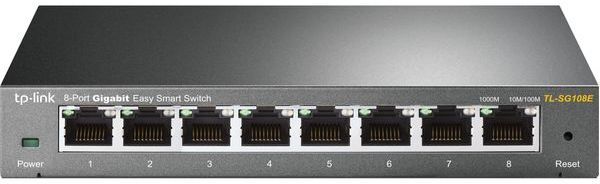
TP-LINK TL-SG108E 8-Port Gigabit Easy Smart Network Switch – Managed Desktop Ethernet SwitchOverview The TP-Link TL-SG108E 8-Port Gigabit Easy Smart Network Switch is a reliable and efficient networking solution designed for small offices, home networks, and workstations. Featuring 8 Gigabit Ethernet ports , this switch provides fast and stable wired connections for computers, printers, IP cameras, gaming consoles, and other network devices. With Easy Smart management features , including VLAN, QoS, and network monitoring, it allows users to optimise network performance while maintaining simple configuration. Built with a durable metal casing and plug-and-play functionality, the TL-SG108E offers dependable network expansion and high-speed connectivity. Key Features 8 Gigabit Ethernet Ports – High-speed wired connections for multiple network devices. Easy Smart Management – Supports VLAN, QoS, IGMP Snooping, and network monitoring features. Plug-and-Play Setup – Simple installation without complex configuration. Gigabit Speeds – Up to 1000Mbps for fast data transfer and network performance. Quality of Service (QoS) – Prioritise network traffic for smooth streaming and gaming. VLAN Support – Improved network segmentation and security. Durable Metal Housing – Robust build designed for long-term reliability. Energy Efficient Design – Automatically adjusts power consumption based on connection status. Fanless Operation – Silent performance suitable for office or home environments. Compact Desktop Design – Ideal for small networking setups. Benefits The TP-Link TL-SG108E is ideal for expanding wired networks while maintaining reliable and high-speed performance. With Gigabit connectivity , it supports smooth data transfer for bandwidth-intensive tasks such as video streaming, file sharing, and online gaming. The Easy Smart management features allow users to optimise network traffic and improve overall network efficiency. Functions such as VLAN segmentation and QoS prioritisation help ensure stable and secure connectivity across connected devices. Its compact, fanless design ensures quiet operation, making it suitable for home offices and workspaces where minimal noise is preferred. With durable metal construction and simple plug-and-play installation, the TL-SG108E provides dependable networking performance with minimal maintenance. Specifications Specification Details Brand TP-Link Model TL-SG108E EAN / Barcode [Ean] Type Easy Smart Gigabit Network Switch Ports 8 × Gigabit Ethernet Ports Switching Capacity 16 Gbps Forwarding Rate 11.9 Mpps Management Features VLAN, QoS, IGMP Snooping, Monitoring Connectivity Ethernet Mounting Desktop Housing Material Metal Cooling Fanless Power Supply External Power Adapter Dimensions Approx. 158 × 101 × 25 mm Weight Approx. 0.46 kg Package Contents TP-Link TL-SG108E Switch, Power Adapter, Installation Guide28,98 £*Shipping: 0,00 £Secure redirect to the provider
-
Pavilion Sharing with the Dog Silicone Snack BowlMake snack time more fun with this pet-inspired silicone snack bowl featuring a playful dog illustration and humorous sentiment. Durable, portable, and designed with a secure lid, it's perfect for enjoying snacks at home, work, school, or on the go21,89 $*Shipping: 0,00 $Secure redirect to the provider



-
Which network medium is most commonly used for tertiary cabling?
Fiber optic cables are the most commonly used network medium for tertiary cabling. Fiber optic cables are preferred for tertiary cabling due to their high bandwidth capabilities, low signal loss over long distances, and resistance to electromagnetic interference. These characteristics make fiber optic cables ideal for connecting network switches, servers, and other high-performance networking equipment in data centers and enterprise environments. **
-
What is the difference between T586A and T586B in network cabling?
The main difference between T586A and T586B in network cabling is the order in which the individual wires inside the cable are terminated on the connector. T586A uses a different wiring sequence than T586B, resulting in a different pinout configuration. This means that if one end of a cable is terminated using T586A, the other end must also be terminated using T586A in order for the cable to function properly. Similarly, if one end is terminated using T586B, the other end must also be terminated using T586B. It is important to follow the correct wiring standard to ensure proper communication and avoid connectivity issues in a network. **
-
Is the network cabling in order? What about shielding and grounding?
The network cabling appears to be in order, with cables neatly organized and properly labeled. Additionally, the cables are shielded to protect against electromagnetic interference, and grounding is also in place to prevent electrical surges and ensure safety. Overall, the network cabling, shielding, and grounding are all properly implemented to maintain a reliable and secure network infrastructure. **
-
Why is aerial cabling prohibited or restricted?
Aerial cabling is often prohibited or restricted due to safety concerns. Aerial cables can pose a hazard to both people and property, especially in areas with high winds or severe weather. Additionally, aerial cabling can be unsightly and negatively impact the aesthetics of a neighborhood or community. In some cases, local regulations may also restrict aerial cabling in order to protect the natural environment or historical landmarks. **


How is the cabling done for a LAN?
Cabling for a LAN is typically done using Ethernet cables, which are connected to each device and then run to a central network switch or router. The cables are plugged into the Ethernet ports on the devices and the switch/router, creating a physical connection between them. The cables are usually run through walls, ceilings, or floors to connect all the devices in the network. Proper cable management and organization are important to ensure efficient and reliable network connectivity. **
Why is the internet slow due to cabling?
The internet can be slow due to cabling issues because outdated or damaged cables can result in poor connectivity and data transmission. As data travels through these compromised cables, it can experience interference or loss of signal strength, leading to slower internet speeds. Additionally, if the cables are not properly installed or maintained, it can further contribute to slow internet connections. Upgrading to newer, higher-quality cables can help improve internet speed and overall performance. **
Top-Angebote
Products related to Cabling:
-
All Categories Goods Outdoor Library Box Wooden Book Exchange Cabinet For Neighborhood Sharing Outdoor Library Box Wooden Book Exchange Cabinet For Neighborhood SharingCreate a welcoming place where stories can be shared, discovered, and loved again. This outdoor library box is a charming wooden cabinet made for neighborhoods, schools, parks, gardens, and front yards. Designed as a book exchange box, it gives...199,97 $*Shipping: 0,00 $Secure redirect to the provider
-
TP-LINK UE300C USB-C to Ethernet Adapter – Gigabit Connectivity for Ultrabooks & TabletsOverview: The TP-Link UE300C is a compact and efficient USB-C to Gigabit Ethernet adapter, designed to provide high-speed wired internet access to devices lacking an Ethernet port. Ideal for ultrabooks, Chromebooks, and tablets, it ensures stable and fast network connections. Product Description: This lightweight adapter features a USB 3.0 Type-C connector and an RJ45 Gigabit Ethernet port, supporting data transfer speeds up to 1000Mbps. Its plug-and-play functionality ensures easy setup without the need for additional drivers on most operating systems, including Windows 10/8.1/8/7, macOS 10.9 and later, Chrome OS, and Linux. The foldable design enhances portability, making it an excellent companion for on-the-go professionals. Key Features: High-Speed Connectivity: Supports Gigabit Ethernet speeds up to 1000Mbps for seamless streaming, gaming, and large file transfers. Plug-and-Play: No additional drivers required for most operating systems; compatible with Windows, macOS, Chrome OS, and Linux. Compact Design: Slim and foldable, perfect for travel and easy storage. Universal Compatibility: Works with a wide range of USB-C devices, including ultrabooks, tablets, and smartphones. Durable Build: Designed for reliable performance and longevity.9,99 £*Shipping: 0,00 £Secure redirect to the provider
-
Uplift Essentials Vocal Link Interactive Pet Communication Buttons green"Break the language barrier between you and your pet with the VocalLink Dog Communication Buttons. This innovative pet training buzzer system allows your dog or cat to ""speak"" their needs by pressing a button that plays your prerecorded voice...."34,97 $*Shipping: 0,00 $Secure redirect to the provider
-
TP-LINK Managed Network Switch 5-Port Gigabit, Support QoS VLAN IGMP Snooping, Network Monitoring through Web Interface, 2.82 W, NewThis item offers easy setup through a web-based user interface and management utility. It is a 5-port RJ45 network switch with speeds of 10/100/1000Mbps, equipped with network monitoring, traffic prioritization, and VLAN capabilities. Additionally, it supports useful features like port mirroring, IGMP snooping, loop prevention, and Link aggregation. Quality of Service (QoS) is also supported, allowing for port-based/802.1p/DSCP priority, rate limiting, and storm control. Moreover, it incorporates energy-efficient technology, which can reduce power consumption by up to 57 percent.18,99 £*Shipping: 0,00 £Secure redirect to the provider
-
What is the question for the network cabling exam?
The question for the network cabling exam is likely to be related to the installation, maintenance, or troubleshooting of network cabling systems. It may cover topics such as different types of network cables, their uses, and best practices for installation. The question may also include scenarios where students are asked to identify and solve common network cabling issues. Overall, the question is designed to test the student's knowledge and understanding of network cabling principles and practices. **
-
Is the network cabling okay? What about shielding and grounding?
The network cabling appears to be in good condition, with no visible signs of damage or wear. Shielding and grounding also seem to be properly implemented, as there are no issues with interference or electrical noise affecting the network performance. Overall, the network cabling, shielding, and grounding appear to be functioning as intended. **
-
Which network medium is most commonly used for tertiary cabling?
Fiber optic cables are the most commonly used network medium for tertiary cabling. Fiber optic cables are preferred for tertiary cabling due to their high bandwidth capabilities, low signal loss over long distances, and resistance to electromagnetic interference. These characteristics make fiber optic cables ideal for connecting network switches, servers, and other high-performance networking equipment in data centers and enterprise environments. **
-
What is the difference between T586A and T586B in network cabling?
The main difference between T586A and T586B in network cabling is the order in which the individual wires inside the cable are terminated on the connector. T586A uses a different wiring sequence than T586B, resulting in a different pinout configuration. This means that if one end of a cable is terminated using T586A, the other end must also be terminated using T586A in order for the cable to function properly. Similarly, if one end is terminated using T586B, the other end must also be terminated using T586B. It is important to follow the correct wiring standard to ensure proper communication and avoid connectivity issues in a network. **
Similar search terms for Cabling
-
TP-LINK TL-SG108E 8-Port Gigabit Easy Smart Network Switch – Managed Desktop Ethernet SwitchOverview The TP-Link TL-SG108E 8-Port Gigabit Easy Smart Network Switch is a reliable and efficient networking solution designed for small offices, home networks, and workstations. Featuring 8 Gigabit Ethernet ports , this switch provides fast and stable wired connections for computers, printers, IP cameras, gaming consoles, and other network devices. With Easy Smart management features , including VLAN, QoS, and network monitoring, it allows users to optimise network performance while maintaining simple configuration. Built with a durable metal casing and plug-and-play functionality, the TL-SG108E offers dependable network expansion and high-speed connectivity. Key Features 8 Gigabit Ethernet Ports – High-speed wired connections for multiple network devices. Easy Smart Management – Supports VLAN, QoS, IGMP Snooping, and network monitoring features. Plug-and-Play Setup – Simple installation without complex configuration. Gigabit Speeds – Up to 1000Mbps for fast data transfer and network performance. Quality of Service (QoS) – Prioritise network traffic for smooth streaming and gaming. VLAN Support – Improved network segmentation and security. Durable Metal Housing – Robust build designed for long-term reliability. Energy Efficient Design – Automatically adjusts power consumption based on connection status. Fanless Operation – Silent performance suitable for office or home environments. Compact Desktop Design – Ideal for small networking setups. Benefits The TP-Link TL-SG108E is ideal for expanding wired networks while maintaining reliable and high-speed performance. With Gigabit connectivity , it supports smooth data transfer for bandwidth-intensive tasks such as video streaming, file sharing, and online gaming. The Easy Smart management features allow users to optimise network traffic and improve overall network efficiency. Functions such as VLAN segmentation and QoS prioritisation help ensure stable and secure connectivity across connected devices. Its compact, fanless design ensures quiet operation, making it suitable for home offices and workspaces where minimal noise is preferred. With durable metal construction and simple plug-and-play installation, the TL-SG108E provides dependable networking performance with minimal maintenance. Specifications Specification Details Brand TP-Link Model TL-SG108E EAN / Barcode [Ean] Type Easy Smart Gigabit Network Switch Ports 8 × Gigabit Ethernet Ports Switching Capacity 16 Gbps Forwarding Rate 11.9 Mpps Management Features VLAN, QoS, IGMP Snooping, Monitoring Connectivity Ethernet Mounting Desktop Housing Material Metal Cooling Fanless Power Supply External Power Adapter Dimensions Approx. 158 × 101 × 25 mm Weight Approx. 0.46 kg Package Contents TP-Link TL-SG108E Switch, Power Adapter, Installation Guide28,98 £*Shipping: 0,00 £Secure redirect to the provider
-
Pavilion Sharing with the Dog Silicone Snack BowlMake snack time more fun with this pet-inspired silicone snack bowl featuring a playful dog illustration and humorous sentiment. Durable, portable, and designed with a secure lid, it's perfect for enjoying snacks at home, work, school, or on the go21,89 $*Shipping: 0,00 $Secure redirect to the provider
-
Pfaltzgraff Winterberry 12In Family and Friends Sharing PlateCelebrate all through the season with a Winterberry 'Family and Friends Plate of Sharing' plate Serveware is ideal for entertaining and serving Platter has a creamy background with delicately rendered holly branches31,49 $*Shipping: 0,00 $Secure redirect to the provider
-
Uplift Essentials Vocal Link Interactive Pet Communication Buttons purple"Break the language barrier between you and your pet with the VocalLink Dog Communication Buttons. This innovative pet training buzzer system allows your dog or cat to ""speak"" their needs by pressing a button that plays your prerecorded voice...."34,97 $*Shipping: 0,00 $Secure redirect to the provider
-
Is the network cabling in order? What about shielding and grounding?
The network cabling appears to be in order, with cables neatly organized and properly labeled. Additionally, the cables are shielded to protect against electromagnetic interference, and grounding is also in place to prevent electrical surges and ensure safety. Overall, the network cabling, shielding, and grounding are all properly implemented to maintain a reliable and secure network infrastructure. **
-
Why is aerial cabling prohibited or restricted?
Aerial cabling is often prohibited or restricted due to safety concerns. Aerial cables can pose a hazard to both people and property, especially in areas with high winds or severe weather. Additionally, aerial cabling can be unsightly and negatively impact the aesthetics of a neighborhood or community. In some cases, local regulations may also restrict aerial cabling in order to protect the natural environment or historical landmarks. **
-
How is the cabling done for a LAN?
Cabling for a LAN is typically done using Ethernet cables, which are connected to each device and then run to a central network switch or router. The cables are plugged into the Ethernet ports on the devices and the switch/router, creating a physical connection between them. The cables are usually run through walls, ceilings, or floors to connect all the devices in the network. Proper cable management and organization are important to ensure efficient and reliable network connectivity. **
-
Why is the internet slow due to cabling?
The internet can be slow due to cabling issues because outdated or damaged cables can result in poor connectivity and data transmission. As data travels through these compromised cables, it can experience interference or loss of signal strength, leading to slower internet speeds. Additionally, if the cables are not properly installed or maintained, it can further contribute to slow internet connections. Upgrading to newer, higher-quality cables can help improve internet speed and overall performance. **
* All prices are inclusive of VAT and, if applicable, plus shipping costs. The offer information is based on the details provided by the respective shop and is updated through automated processes. Real-time updates do not occur, so deviations can occur in individual cases. ** Note: Parts of this content were created by AI.