Buy xshare.eu ?
We are moving the project
xshare.eu .
Are you interested in purchasing the domain
xshare.eu ?
domain@kv-gmbh.de · 0541-91531010
Buy xshare.eu ?
Why dative?
The dative case is used in many languages to indicate the indirect object of a verb, showing to whom or for whom an action is done. It helps clarify the recipient of an action or the person who benefits from it. By using the dative case, speakers can provide more specific information about the relationships between the subject, verb, and object in a sentence. This case is essential for conveying nuances of meaning and ensuring clear communication in various contexts. **
Dative or accusative?
Dative and accusative are two different cases in grammar that indicate the relationship between a verb and its object. The dative case is used to show the indirect object of a verb, while the accusative case is used to show the direct object. To determine whether to use dative or accusative, you need to consider the verb in the sentence and identify whether the object is receiving the action directly (accusative) or indirectly (dative). **


Similar search terms for Dative
Top-Angebote
Products related to Dative:
-
Uplift Essentials Vocal Link Interactive Pet Communication Buttons orange"Break the language barrier between you and your pet with the VocalLink Dog Communication Buttons. This innovative pet training buzzer system allows your dog or cat to ""speak"" their needs by pressing a button that plays your prerecorded voice...."34,97 $*Shipping: 0,00 $Secure redirect to the provider
-
TP-LINK Managed Network Switch 5-Port Gigabit, Support QoS VLAN IGMP Snooping, Network Monitoring through Web Interface, 2.82 W, NewThis item offers easy setup through a web-based user interface and management utility. It is a 5-port RJ45 network switch with speeds of 10/100/1000Mbps, equipped with network monitoring, traffic prioritization, and VLAN capabilities. Additionally, it supports useful features like port mirroring, IGMP snooping, loop prevention, and Link aggregation. Quality of Service (QoS) is also supported, allowing for port-based/802.1p/DSCP priority, rate limiting, and storm control. Moreover, it incorporates energy-efficient technology, which can reduce power consumption by up to 57 percent.18,99 £*Shipping: 0,00 £Secure redirect to the provider
-
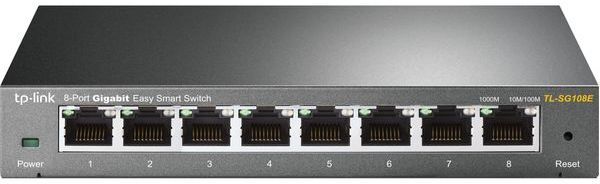
TP-LINK TL-SG108E 8-Port Gigabit Easy Smart Network Switch – Managed Desktop Ethernet SwitchOverview The TP-Link TL-SG108E 8-Port Gigabit Easy Smart Network Switch is a reliable and efficient networking solution designed for small offices, home networks, and workstations. Featuring 8 Gigabit Ethernet ports , this switch provides fast and stable wired connections for computers, printers, IP cameras, gaming consoles, and other network devices. With Easy Smart management features , including VLAN, QoS, and network monitoring, it allows users to optimise network performance while maintaining simple configuration. Built with a durable metal casing and plug-and-play functionality, the TL-SG108E offers dependable network expansion and high-speed connectivity. Key Features 8 Gigabit Ethernet Ports – High-speed wired connections for multiple network devices. Easy Smart Management – Supports VLAN, QoS, IGMP Snooping, and network monitoring features. Plug-and-Play Setup – Simple installation without complex configuration. Gigabit Speeds – Up to 1000Mbps for fast data transfer and network performance. Quality of Service (QoS) – Prioritise network traffic for smooth streaming and gaming. VLAN Support – Improved network segmentation and security. Durable Metal Housing – Robust build designed for long-term reliability. Energy Efficient Design – Automatically adjusts power consumption based on connection status. Fanless Operation – Silent performance suitable for office or home environments. Compact Desktop Design – Ideal for small networking setups. Benefits The TP-Link TL-SG108E is ideal for expanding wired networks while maintaining reliable and high-speed performance. With Gigabit connectivity , it supports smooth data transfer for bandwidth-intensive tasks such as video streaming, file sharing, and online gaming. The Easy Smart management features allow users to optimise network traffic and improve overall network efficiency. Functions such as VLAN segmentation and QoS prioritisation help ensure stable and secure connectivity across connected devices. Its compact, fanless design ensures quiet operation, making it suitable for home offices and workspaces where minimal noise is preferred. With durable metal construction and simple plug-and-play installation, the TL-SG108E provides dependable networking performance with minimal maintenance. Specifications Specification Details Brand TP-Link Model TL-SG108E EAN / Barcode [Ean] Type Easy Smart Gigabit Network Switch Ports 8 × Gigabit Ethernet Ports Switching Capacity 16 Gbps Forwarding Rate 11.9 Mpps Management Features VLAN, QoS, IGMP Snooping, Monitoring Connectivity Ethernet Mounting Desktop Housing Material Metal Cooling Fanless Power Supply External Power Adapter Dimensions Approx. 158 × 101 × 25 mm Weight Approx. 0.46 kg Package Contents TP-Link TL-SG108E Switch, Power Adapter, Installation Guide28,98 £*Shipping: 0,00 £Secure redirect to the provider
-
Pfaltzgraff Winterberry 12In Family and Friends Sharing PlateCelebrate all through the season with a Winterberry 'Family and Friends Plate of Sharing' plate Serveware is ideal for entertaining and serving Platter has a creamy background with delicately rendered holly branches31,49 $*Shipping: 0,00 $Secure redirect to the provider



-
Why dative case?
The dative case is used to indicate the indirect object of a sentence, showing to whom or for whom an action is being done. It helps to clarify the relationships between the different elements of a sentence and is essential for conveying the correct meaning. In many languages, including German, Russian, and Latin, the dative case is an important part of the grammar and is used in a wide range of contexts. Overall, the dative case is important for expressing the recipient or beneficiary of an action and is an essential part of understanding and using these languages effectively. **
-
When to use dative?
The dative case is used in German to indicate the indirect object of a sentence, which is the person or thing that receives the direct object. It is also used after certain prepositions, such as "mit" (with), "nach" (after), and "von" (from). Additionally, the dative case is used with certain verbs that require an indirect object, such as "helfen" (to help) or "antworten" (to answer). **
-
Tolerate dative or accusative?
Whether to use the dative or accusative case in German depends on the verb being used and the prepositions that accompany it. Some verbs require the dative case, such as helfen (to help) or danken (to thank), while others require the accusative case, such as sehen (to see) or essen (to eat). It is important to learn which case each verb requires in order to use the correct form in a sentence. **
-
Dative or Genitive 2?
The choice between dative and genitive case in German depends on the verb or preposition being used. "Dative" is used to indicate the indirect object of a sentence, while "genitive" is used to show possession or a relationship between two nouns. "Genitive 2" specifically refers to the genitive case used after certain prepositions, such as trotz (despite) or während (during). It's important to learn the specific prepositions and verbs that require either dative or genitive case in order to use them correctly in German sentences. **


What are dative adjectives?
Dative adjectives are adjectives that are used to describe nouns in the dative case. In many languages, including German and Latin, the dative case is used to indicate the indirect object of a verb or the recipient of an action. Dative adjectives agree in gender, number, and case with the noun they are describing, and they often convey a sense of possession, benefit, or disadvantage. For example, in German, the dative adjective "guten" (good) would be used to describe a masculine singular noun in the dative case, such as "dem Mann" (to the man). **
Is there a difference between the dative case and the dative object?
Yes, there is a difference between the dative case and the dative object. The dative case is a grammatical case that typically indicates the indirect object of a verb or the object of certain prepositions. On the other hand, the dative object refers specifically to the noun or pronoun that is in the dative case in a sentence. In other words, the dative case is a grammatical concept, while the dative object is a specific element within a sentence that is marked by the dative case. **
Top-Angebote
Products related to Dative:
-
All Categories Goods Outdoor Library Box Wooden Book Exchange Cabinet For Neighborhood Sharing Outdoor Library Box Wooden Book Exchange Cabinet For Neighborhood SharingCreate a welcoming place where stories can be shared, discovered, and loved again. This outdoor library box is a charming wooden cabinet made for neighborhoods, schools, parks, gardens, and front yards. Designed as a book exchange box, it gives...199,97 $*Shipping: 0,00 $Secure redirect to the provider
-
TP-LINK UE300C USB-C to Ethernet Adapter – Gigabit Connectivity for Ultrabooks & TabletsOverview: The TP-Link UE300C is a compact and efficient USB-C to Gigabit Ethernet adapter, designed to provide high-speed wired internet access to devices lacking an Ethernet port. Ideal for ultrabooks, Chromebooks, and tablets, it ensures stable and fast network connections. Product Description: This lightweight adapter features a USB 3.0 Type-C connector and an RJ45 Gigabit Ethernet port, supporting data transfer speeds up to 1000Mbps. Its plug-and-play functionality ensures easy setup without the need for additional drivers on most operating systems, including Windows 10/8.1/8/7, macOS 10.9 and later, Chrome OS, and Linux. The foldable design enhances portability, making it an excellent companion for on-the-go professionals. Key Features: High-Speed Connectivity: Supports Gigabit Ethernet speeds up to 1000Mbps for seamless streaming, gaming, and large file transfers. Plug-and-Play: No additional drivers required for most operating systems; compatible with Windows, macOS, Chrome OS, and Linux. Compact Design: Slim and foldable, perfect for travel and easy storage. Universal Compatibility: Works with a wide range of USB-C devices, including ultrabooks, tablets, and smartphones. Durable Build: Designed for reliable performance and longevity.9,99 £*Shipping: 0,00 £Secure redirect to the provider
-
Uplift Essentials Vocal Link Interactive Pet Communication Buttons orange"Break the language barrier between you and your pet with the VocalLink Dog Communication Buttons. This innovative pet training buzzer system allows your dog or cat to ""speak"" their needs by pressing a button that plays your prerecorded voice...."34,97 $*Shipping: 0,00 $Secure redirect to the provider
-
TP-LINK Managed Network Switch 5-Port Gigabit, Support QoS VLAN IGMP Snooping, Network Monitoring through Web Interface, 2.82 W, NewThis item offers easy setup through a web-based user interface and management utility. It is a 5-port RJ45 network switch with speeds of 10/100/1000Mbps, equipped with network monitoring, traffic prioritization, and VLAN capabilities. Additionally, it supports useful features like port mirroring, IGMP snooping, loop prevention, and Link aggregation. Quality of Service (QoS) is also supported, allowing for port-based/802.1p/DSCP priority, rate limiting, and storm control. Moreover, it incorporates energy-efficient technology, which can reduce power consumption by up to 57 percent.18,99 £*Shipping: 0,00 £Secure redirect to the provider
-
Why dative?
The dative case is used in many languages to indicate the indirect object of a verb, showing to whom or for whom an action is done. It helps clarify the recipient of an action or the person who benefits from it. By using the dative case, speakers can provide more specific information about the relationships between the subject, verb, and object in a sentence. This case is essential for conveying nuances of meaning and ensuring clear communication in various contexts. **
-
Dative or accusative?
Dative and accusative are two different cases in grammar that indicate the relationship between a verb and its object. The dative case is used to show the indirect object of a verb, while the accusative case is used to show the direct object. To determine whether to use dative or accusative, you need to consider the verb in the sentence and identify whether the object is receiving the action directly (accusative) or indirectly (dative). **
-
Why dative case?
The dative case is used to indicate the indirect object of a sentence, showing to whom or for whom an action is being done. It helps to clarify the relationships between the different elements of a sentence and is essential for conveying the correct meaning. In many languages, including German, Russian, and Latin, the dative case is an important part of the grammar and is used in a wide range of contexts. Overall, the dative case is important for expressing the recipient or beneficiary of an action and is an essential part of understanding and using these languages effectively. **
-
When to use dative?
The dative case is used in German to indicate the indirect object of a sentence, which is the person or thing that receives the direct object. It is also used after certain prepositions, such as "mit" (with), "nach" (after), and "von" (from). Additionally, the dative case is used with certain verbs that require an indirect object, such as "helfen" (to help) or "antworten" (to answer). **
Similar search terms for Dative
-
TP-LINK TL-SG108E 8-Port Gigabit Easy Smart Network Switch – Managed Desktop Ethernet SwitchOverview The TP-Link TL-SG108E 8-Port Gigabit Easy Smart Network Switch is a reliable and efficient networking solution designed for small offices, home networks, and workstations. Featuring 8 Gigabit Ethernet ports , this switch provides fast and stable wired connections for computers, printers, IP cameras, gaming consoles, and other network devices. With Easy Smart management features , including VLAN, QoS, and network monitoring, it allows users to optimise network performance while maintaining simple configuration. Built with a durable metal casing and plug-and-play functionality, the TL-SG108E offers dependable network expansion and high-speed connectivity. Key Features 8 Gigabit Ethernet Ports – High-speed wired connections for multiple network devices. Easy Smart Management – Supports VLAN, QoS, IGMP Snooping, and network monitoring features. Plug-and-Play Setup – Simple installation without complex configuration. Gigabit Speeds – Up to 1000Mbps for fast data transfer and network performance. Quality of Service (QoS) – Prioritise network traffic for smooth streaming and gaming. VLAN Support – Improved network segmentation and security. Durable Metal Housing – Robust build designed for long-term reliability. Energy Efficient Design – Automatically adjusts power consumption based on connection status. Fanless Operation – Silent performance suitable for office or home environments. Compact Desktop Design – Ideal for small networking setups. Benefits The TP-Link TL-SG108E is ideal for expanding wired networks while maintaining reliable and high-speed performance. With Gigabit connectivity , it supports smooth data transfer for bandwidth-intensive tasks such as video streaming, file sharing, and online gaming. The Easy Smart management features allow users to optimise network traffic and improve overall network efficiency. Functions such as VLAN segmentation and QoS prioritisation help ensure stable and secure connectivity across connected devices. Its compact, fanless design ensures quiet operation, making it suitable for home offices and workspaces where minimal noise is preferred. With durable metal construction and simple plug-and-play installation, the TL-SG108E provides dependable networking performance with minimal maintenance. Specifications Specification Details Brand TP-Link Model TL-SG108E EAN / Barcode [Ean] Type Easy Smart Gigabit Network Switch Ports 8 × Gigabit Ethernet Ports Switching Capacity 16 Gbps Forwarding Rate 11.9 Mpps Management Features VLAN, QoS, IGMP Snooping, Monitoring Connectivity Ethernet Mounting Desktop Housing Material Metal Cooling Fanless Power Supply External Power Adapter Dimensions Approx. 158 × 101 × 25 mm Weight Approx. 0.46 kg Package Contents TP-Link TL-SG108E Switch, Power Adapter, Installation Guide28,98 £*Shipping: 0,00 £Secure redirect to the provider
-
Pfaltzgraff Winterberry 12In Family and Friends Sharing PlateCelebrate all through the season with a Winterberry 'Family and Friends Plate of Sharing' plate Serveware is ideal for entertaining and serving Platter has a creamy background with delicately rendered holly branches31,49 $*Shipping: 0,00 $Secure redirect to the provider
-
Pavilion Sharing with the Dog Silicone Snack BowlMake snack time more fun with this pet-inspired silicone snack bowl featuring a playful dog illustration and humorous sentiment. Durable, portable, and designed with a secure lid, it's perfect for enjoying snacks at home, work, school, or on the go21,79 $*Shipping: 0,00 $Secure redirect to the provider
-
Uplift Essentials Vocal Link Interactive Pet Communication Buttons purple"Break the language barrier between you and your pet with the VocalLink Dog Communication Buttons. This innovative pet training buzzer system allows your dog or cat to ""speak"" their needs by pressing a button that plays your prerecorded voice...."34,97 $*Shipping: 0,00 $Secure redirect to the provider
-
Tolerate dative or accusative?
Whether to use the dative or accusative case in German depends on the verb being used and the prepositions that accompany it. Some verbs require the dative case, such as helfen (to help) or danken (to thank), while others require the accusative case, such as sehen (to see) or essen (to eat). It is important to learn which case each verb requires in order to use the correct form in a sentence. **
-
Dative or Genitive 2?
The choice between dative and genitive case in German depends on the verb or preposition being used. "Dative" is used to indicate the indirect object of a sentence, while "genitive" is used to show possession or a relationship between two nouns. "Genitive 2" specifically refers to the genitive case used after certain prepositions, such as trotz (despite) or während (during). It's important to learn the specific prepositions and verbs that require either dative or genitive case in order to use them correctly in German sentences. **
-
What are dative adjectives?
Dative adjectives are adjectives that are used to describe nouns in the dative case. In many languages, including German and Latin, the dative case is used to indicate the indirect object of a verb or the recipient of an action. Dative adjectives agree in gender, number, and case with the noun they are describing, and they often convey a sense of possession, benefit, or disadvantage. For example, in German, the dative adjective "guten" (good) would be used to describe a masculine singular noun in the dative case, such as "dem Mann" (to the man). **
-
Is there a difference between the dative case and the dative object?
Yes, there is a difference between the dative case and the dative object. The dative case is a grammatical case that typically indicates the indirect object of a verb or the object of certain prepositions. On the other hand, the dative object refers specifically to the noun or pronoun that is in the dative case in a sentence. In other words, the dative case is a grammatical concept, while the dative object is a specific element within a sentence that is marked by the dative case. **
* All prices are inclusive of VAT and, if applicable, plus shipping costs. The offer information is based on the details provided by the respective shop and is updated through automated processes. Real-time updates do not occur, so deviations can occur in individual cases. ** Note: Parts of this content were created by AI.